Utsav Offer — Save 20% on eligible jewellery worth ₹6,999 or more
Utsav Offer — Save 20% on eligible jewellery worth ₹6,999 or more
Utsav Offer — Save 20% on eligible jewellery worth ₹6,999 or more
Utsav Offer — Save 20% on eligible jewellery worth ₹6,999 or more
Utsav Offer — Save 20% on eligible jewellery worth ₹6,999 or more
Utsav Offer — Save 20% on eligible jewellery worth ₹6,999 or more
Utsav Offer — Save 20% on eligible jewellery worth ₹6,999 or more
Utsav Offer — Save 20% on eligible jewellery worth ₹6,999 or more
Utsav Offer — Save 20% on eligible jewellery worth ₹6,999 or more
Utsav Offer — Save 20% on eligible jewellery worth ₹6,999 or more
We've sent you an email with a link to update your password.
Reset your password
We will send you an email to reset your password.
36 Types of Indian Jewellery A Complete Guide
0 comments
Buying Guide · Indian Jewellery · Heritage
Quick Answer India's 36 major jewellery types include Antique, Bead, Bridal, Gold, Handmade, Ivory, Jadau, Kundan, Lac, Meenakari, Navratna, Pachchikam, Silver, Platinum, Gemstone, Tribal, Custom, Fashion, Filigree, Polki, Thewa, Sarpech, Swamy, Prayer, Temple, Puzzle, Amulet, Estate, Art, Body-Piercing, Nizami, Paambadam, Vaddanam, Paasa, Timaniya and Jadanagam jewellery. They differ by material (gold, silver, platinum, gemstones, beads, lac), technique (Kundan-setting, Meenakari enamelling, filigree, Jadau) and purpose (bridal, temple, astrological, prayer or everyday adornment).
The Many Faces of Indian Jewellery
The jewellery of India is as varied as the languages spoken across the country. From uncut-diamond Polki to enamelled Meenakari, from bridal Guttapusalu to royal Nizam heirlooms — each style carries its own region, ritual and centuries of craft. Below is a complete guide to 36 of India's most beloved jewellery designs, grouped so you can find the style that fits your occasion.
India's jewellery tradition spans dozens of regional and ceremonial styles.
Precious Metal & Stone Jewellery
1
Gold Jewellery
The metal of desire and a symbol of prosperity, gold is a guaranteed investment and auspicious for weddings, engagements and festivals.
2
Silver Jewellery
Rings, bracelets, chains, nose rings, toe rings and armlets — silver forms an integral, everyday part of Indian adornment.
3
Platinum Jewellery
Prized for rarity, purity and versatility, platinum has emerged as a leading modern trend in rings, earrings and necklaces.
4
Gemstone Jewellery
Worn for astrological benefit and aesthetic beauty, gemstone jewellery remains a continuing favourite across India.
5
Navratna Jewellery
Nine gemstones set in a single ornament, believed together to ensure the well-being of the wearer.
6
Ivory Jewellery
Made from ivory or its substitutes, traditionally considered to bring a bride luck as she begins married life.
Diamond & Traditional Setting Techniques
7
Polki Jewellery
Polki uses uncut diamonds mined naturally from the earth, prized for their raw, regal brilliance.
8
Kundan Jewellery
Kundankari, perfected in Rajasthan, sets stones on one side with colourful Meenakari on the reverse.
9
Jadau Jewellery
Engraved jewellery brought to India by the Mughals — an intricate mix of design, gemstones, gold and enamel.
10
Meenakari Jewellery
Precious stones set and then enamelled with gold, adding vivid colour and depth to the piece.
11
Pachchikam Jewellery
Flashy yet rustic, Pachchikam stands apart because it is set in silver rather than gold.
12
Thewa Jewellery
A worked thin sheet of gold fused into molten coloured glass, suggestive of gemstones.
13
Filigree Jewellery
Carefully crafted silver jewellery in delicate wirework, ranging from the simple to the ornate.
Kundan and Meenakari work combine on a single piece — a hallmark of traditional Indian craft.
Bridal, Regional & Temple Jewellery
14
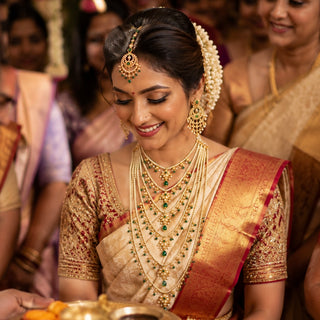
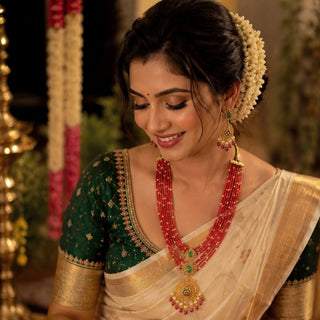
Bridal Jewellery
Indian brides are decked in pieces symbolising a cheerful celebration of new life, varying beautifully across regions.
15
Temple Jewellery
Originally made for gods and goddesses, temple jewellery is now mainstream, especially in South India.
16
Vaddanam / Odiyannam
One of the heaviest ornaments, the Vaddanam is a South Indian waist belt.
17
Jadanagam Jewellery
The "hair-serpent" — a ruby-and-gold hair adornment worn in South Indian bridal and Devadasi costumes.
18
Paambadam Jewellery
A heavy snake-shaped earring of Kerala and Tamil Nadu, traditionally worn to elongate the earlobes.
19
Swamy Jewellery
Gold and silver jewellery from parts of Tamil Nadu, with a jewellery-making history spanning millennia.
20
Paasa Jewellery
A Mughal-origin crown-piece, worn particularly by Muslim brides in Uttar Pradesh.
21
Timaniya Jewellery
A heavy, diamond-encrusted ornament rooted in the Rajput tradition.
22
Sarpech
Ornate turban ornaments traditionally worn by royalty, both Hindu and Muslim.
23
Jewels of the Nizams
Gold and silver heirlooms of the Nizams of Hyderabad, enamelled and set with diamonds and rubies.
The Vaddanam — among the heaviest and most ornate of South Indian bridal ornaments.
Craft, Material & Contemporary Styles
24
Antique Jewellery
Rough-finished pieces with an old-world charm that has won enormous admiration in recent times.
25
Bead Jewellery
Bead art dating to the Indus Valley Civilisation, using gold, silver, copper, clay, ivory and wood.
26
Handmade Jewellery
In India, jewellery has long been synonymous with the handmade — the mark of true craftsmanship.
27
Lac Jewellery
Also called lacquer jewellery; a Rajasthani craft loved especially for its colourful bangles.
28
Tribal Jewellery
Made of wood, bone, shells or metals, with a rustic charm and designs unique to each tribe.
29
Custom Jewellery
Personalised pieces made to the individual interest and fancy of the customer.
30
Fashion Jewellery
Costume jewellery in lighter, affordable materials that shifts with the trends of the season.
31
Art Jewellery
Studio-crafted pieces emphasising creative design, innovation and a wide variety of materials.
32
Estate Jewellery
Pre-owned antique or vintage jewellery, valued for its heritage and rarity.
33
Puzzle Jewellery
A mechanically functional piece of intricate finish that works like a puzzle.
34
Body-Piercing Jewellery
Once simple circular earrings, now a fast-growing range driven by rising interest in piercings.
35
Prayer Jewellery
Prayer beads, japa malas, rosaries and ropes used across India's many faiths.
36
Amulets
Often worn as pendants, amulets are believed to protect the wearer from harm.
A Living Tradition
These jewellery types are age-old, yet hardly obsolete — every one has seeped comfortably into the mainstream. And these are only some of the styles India has to offer; the tradition runs far deeper still. Whichever style speaks to you, there is a piece with your name on it.
Find Your Favourite at Krishna Pearls
Explore handcrafted pearl, gold, Polki and temple jewellery — a legacy rooted near Charminar since 1983.
What is the difference between Kundan and Polki jewellery?
Kundan uses cut or polished glass and gemstones set with refined gold foil (Kundankari), often with Meenakari enamel on the reverse. Polki uses natural, uncut diamonds in their raw form, giving a rougher, more regal sparkle. Polki is generally considered the more premium of the two.
Which jewellery types are most popular for South Indian brides?
South Indian brides traditionally wear temple jewellery, Guttapusalu, Kasulaperu (coin necklaces), Vaddanam (waist belt) and Jadanagam (hair-serpent), typically crafted in gold and often set with rubies, emeralds and pearls.
What is temple jewellery?
Temple jewellery was originally crafted to adorn deities in South Indian temples. Featuring motifs of gods, goddesses and mythological figures in gold, it has since become a mainstream bridal and classical-dance favourite.
Is Polki jewellery a good investment?
Polki jewellery holds strong value because it combines pure gold with natural uncut diamonds. While it is priced higher than Kundan, its heritage craftsmanship and diamond content make it a lasting heirloom investment.
What jewellery is Hyderabad famous for?
Hyderabad is renowned for the Jewels of the Nizams, its exceptional pearl jewellery, and fine Polki and temple work. Krishna Pearls, established near Charminar in 1983, continues this Hyderabadi heritage across pearls, gold and gemstone jewellery.
This guide is compiled from general knowledge of Indian jewellery traditions as of 2026. Regional styles, names and availability vary — please confirm current designs and details directly with Krishna Pearls. Krishna Pearls is a brand of Krishna Jewellers Pearls & Gems Pvt. Ltd., Hyderabad.




 Festive Giftbox
₹ 1,300
Festive Giftbox
₹ 1,300