Utsav Offer — Save 20% on eligible jewellery worth ₹6,999 or more
Utsav Offer — Save 20% on eligible jewellery worth ₹6,999 or more
Utsav Offer — Save 20% on eligible jewellery worth ₹6,999 or more
Utsav Offer — Save 20% on eligible jewellery worth ₹6,999 or more
Utsav Offer — Save 20% on eligible jewellery worth ₹6,999 or more
Utsav Offer — Save 20% on eligible jewellery worth ₹6,999 or more
Utsav Offer — Save 20% on eligible jewellery worth ₹6,999 or more
Utsav Offer — Save 20% on eligible jewellery worth ₹6,999 or more
Utsav Offer — Save 20% on eligible jewellery worth ₹6,999 or more
Utsav Offer — Save 20% on eligible jewellery worth ₹6,999 or more
We've sent you an email with a link to update your password.
Reset your password
We will send you an email to reset your password.
Moti Necklace vs Moti Mala Pearl Jewellery Guide
0 comments
Moti Necklace and Moti Mala: A Guide to Pearl Jewellery Vocabulary for Indian Buyers
By Krishna Pearls Editorial TeamUpdated 8 min read
Quick answer
Moti is the Hindi and Urdu word for pearl. A moti necklace is any necklace made mainly of pearls, short or long, single or layered, with or without gold and gemstones. A moti mala is the traditional term for a pearl strand or garland, usually long and often multi-strand. Neither word tells you whether the pearls are natural, cultured or imitation, so always ask the jeweller to state the pearl type on your bill.
In India, pearls are often simply called moti, and a pearl necklace may be described as a moti necklace or a moti mala. Families, jewellery stores and designers use these words loosely and sometimes interchangeably, but they don't always mean the same design.
Knowing a few basic terms makes it much easier to compare pieces, ask the right questions and pay a fair price. This guide explains the vocabulary you will hear at a pearl counter, the common moti necklace designs, and what to check before you buy.
Key takeaways
Moti necklace is the broad term for any pearl necklace. Moti mala usually means a traditional, longer or multi-strand pearl garland.
The word "moti" alone does not prove a piece contains real pearls. Ask whether they are natural, cultured or imitation.
Cultured pearls are genuine pearls. Imitation pearls are coated glass or plastic.
Judge quality by lustre, surface, shape, size and matching, checked across several pearls in good light.
For pieces with gold, ask for gold fineness, gold weight and pricing to be stated separately from the pearls.
Moti necklace vs moti mala: what is the difference?
The easiest way to understand these terms is to look at length, design and the way the pearls are arranged.
A moti necklace refers to any necklace made predominantly of pearls. It can be short or long, a single strand or several layers, and it may combine pearls with gold and gemstones.
A moti mala refers to a traditional pearl necklace or pearl strand, usually long and often with multiple strands. Mala means garland or string, which is why the term is closely tied to strung, garland-style pearl jewellery.
Moti necklace
Moti mala
Meaning
Any necklace made mainly of pearls
A traditional pearl strand or garland
Typical length
Short or long
Usually long, often falling to the lower chest
Strands
Single or layered
Often two or more strands
Other materials
May include gold, beads, pendants or gemstones
May include gold accents or spacers
Common occasions
Daily, office and festive wear
Weddings, celebrations and ceremonial dress
In practice the two terms overlap, and different sellers use them differently. When in doubt, describe what you want (length, number of strands, gold or no gold) rather than relying on the name.
Common types of moti necklace designs
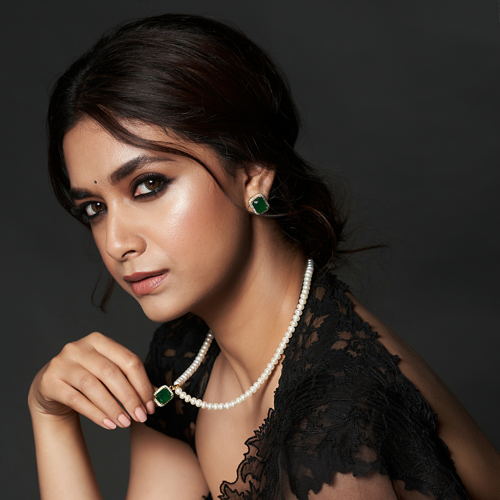
Single-strand moti necklace
A single-strand moti necklace is made of one row of pearls. Its simplicity makes it easy to wear with both Indian outfits and office wear. Its overall look depends on the size, colour and shape of the pearls used.
Multi-strand moti mala
A multi-strand moti mala has two or more strands of pearls. It is a popular choice for weddings, celebrations and ceremonial dress. When buying one, check that the strands sit well together and that the connections and clasp are secure.
Long moti mala
A long moti mala usually falls to the lower part of the chest. It can be worn alone or layered with a shorter necklace. Some are a single long string, while others have several strings or gold adornments. Long moti malas pair beautifully with sarees and lehengas.
Gold and moti necklace
This design combines pearls with gold chains, gold beads, motifs or a pendant. Gold adds contrast to the soft glow of pearls and gives the necklace a classic feel. Ask the jeweller exactly which parts are gold, what the gold purity is, and whether the pearls are natural, cultured or imitation.
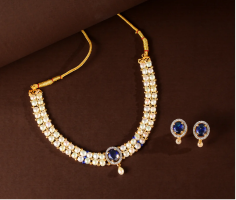
Moti necklace with coloured stones
Some moti necklaces include rubies, emeralds, sapphires or other coloured stones. These add colour and help the piece complement a saree or bridal outfit. If the stones are an important part of what you are paying for, ask about their authenticity too.
Pearl vocabulary every Indian buyer should know
Understanding these terms helps you compare moti necklaces on more than appearance alone.
Moti
The Hindi and Urdu word for pearl. In jewellery shopping it can refer to pearls in necklaces, earrings, bangles and other pieces. The word alone does not tell you whether a pearl is natural, cultured or imitation, so always ask the seller to specify.
Natural pearl
A pearl that forms inside a mollusc without any deliberate human insertion of a nucleus or tissue. Natural pearls are rare in today's jewellery market. If a necklace is sold as natural pearl jewellery, ask for clear documentation and independent laboratory verification.
Cultured pearl
A pearl that forms inside a mollusc after human intervention starts the process. Cultured pearls are genuine pearls, not imitations, and most pearl necklaces sold by jewellers today use them. Their value depends on type, size, lustre, surface quality, shape and matching.
Imitation pearl
A manufactured copy, usually glass, plastic or another material coated with a pearl-like finish, used in fashion jewellery. Imitations can be attractive, but they should never be confused with natural or cultured pearls. Confirm the material before you compare prices.
Lustre
The way light reflects off a pearl's surface, appearing to glow from within. Pearls with good lustre look brighter and sharper than dull ones. Check the reflections on several pearls in the necklace, not just one.
Surface quality
How clean the pearl's surface looks. Most pearls have small spots, bumps or lines. Minor marks don't necessarily mean poor quality; consider how visible they are, how the piece looks overall, and the price.
Shape
Pearls come in round, near-round, oval, button, drop and baroque shapes. Round pearls are the most popular for their uniform, traditional elegance. Baroque pearls have irregular shapes that suit distinctive modern designs. Choose the shape that fits the look you want.
Size
Measured in millimetres (mm). Small pearls look delicate while larger pearls make a bolder statement. Size is only one factor in judging quality.
Matching
How closely the pearls in a necklace resemble each other in size, colour, shape and lustre. A well-matched strand looks consistent, although some designs are intentionally graduated or mixed.
Graduated pearls
A design in which pearl sizes change gradually, with the largest pearls at the centre and the smallest towards the clasp.
What to check before buying a moti necklace
Pearl type. Ask whether the pearls are natural, cultured or imitation. These are very different, and the price should reflect it.
Lustre, surface, shape and matching. View the necklace in good light and look at several pearls, not only the most visible ones.
Graduation. In a graduated design, the change in size should be smooth and balanced on both sides.
Length and construction. Check the clasp, the condition of the stringing or linking, and how the necklace sits when you wear it.
Gold details. If the piece combines gold and pearls, ask about gold purity, gold weight and how each part is priced.
Documentation. For any special claims about pearl origin, type or value, ask for documents. A product name or the word "moti" does not prove you are buying real pearls.
A moti necklace is a pearl necklace. The term is used for pearl necklaces in general, including designs that combine pearls with gold and gemstones.
What is the difference between a moti mala and a moti necklace?
The two terms are often used interchangeably. Moti necklace is the general term for any pearl necklace, while moti mala usually refers to a traditional pearl strand or garland, typically long and often with multiple strands.
Do all moti necklaces have natural pearls?
No. A moti necklace may contain natural pearls, cultured pearls or imitation pearls. Ask the jeweller to state the pearl type and print it on your invoice.
What makes a pearl necklace look high quality?
Good lustre, clean surfaces, consistent shape and size, close matching and careful workmanship make a pearl necklace look high quality. The pearl type and supporting documentation also matter when judging value.
What is the difference between natural and cultured pearls?
Natural pearls form without any deliberate human intervention, while cultured pearls form after human intervention starts the process. Both are real pearls. Imitation pearls are artificial.
How should I style a long moti mala?
Wear a long moti mala on its own with a saree or ethnic outfit, or layer it with a shorter necklace. When layering, choose pieces with clearly different lengths and designs.
How do I take care of a pearl necklace?
Pearls are more delicate than many other gems. Wipe them gently with a soft, clean cloth after wearing, keep them away from perfume and cosmetics, and store them separately from other jewellery.
K
Krishna Pearls Editorial Team Written by the pearl specialists at Krishna Pearls, part of Krishna Jewellers Pearls & Gems Pvt. Ltd., Hyderabad, established 1983 at Pathragatti, Charminar.




 Festive Giftbox
₹ 1,300
Festive Giftbox
₹ 1,300