Utsav Offer — Save 20% on eligible jewellery worth ₹6,999 or more
Utsav Offer — Save 20% on eligible jewellery worth ₹6,999 or more
Utsav Offer — Save 20% on eligible jewellery worth ₹6,999 or more
Utsav Offer — Save 20% on eligible jewellery worth ₹6,999 or more
Utsav Offer — Save 20% on eligible jewellery worth ₹6,999 or more
Utsav Offer — Save 20% on eligible jewellery worth ₹6,999 or more
Utsav Offer — Save 20% on eligible jewellery worth ₹6,999 or more
Utsav Offer — Save 20% on eligible jewellery worth ₹6,999 or more
Utsav Offer — Save 20% on eligible jewellery worth ₹6,999 or more
Utsav Offer — Save 20% on eligible jewellery worth ₹6,999 or more
We've sent you an email with a link to update your password.
Reset your password
We will send you an email to reset your password.
Men's Jewellery Finding Your Style at an Exhibition
0 comments
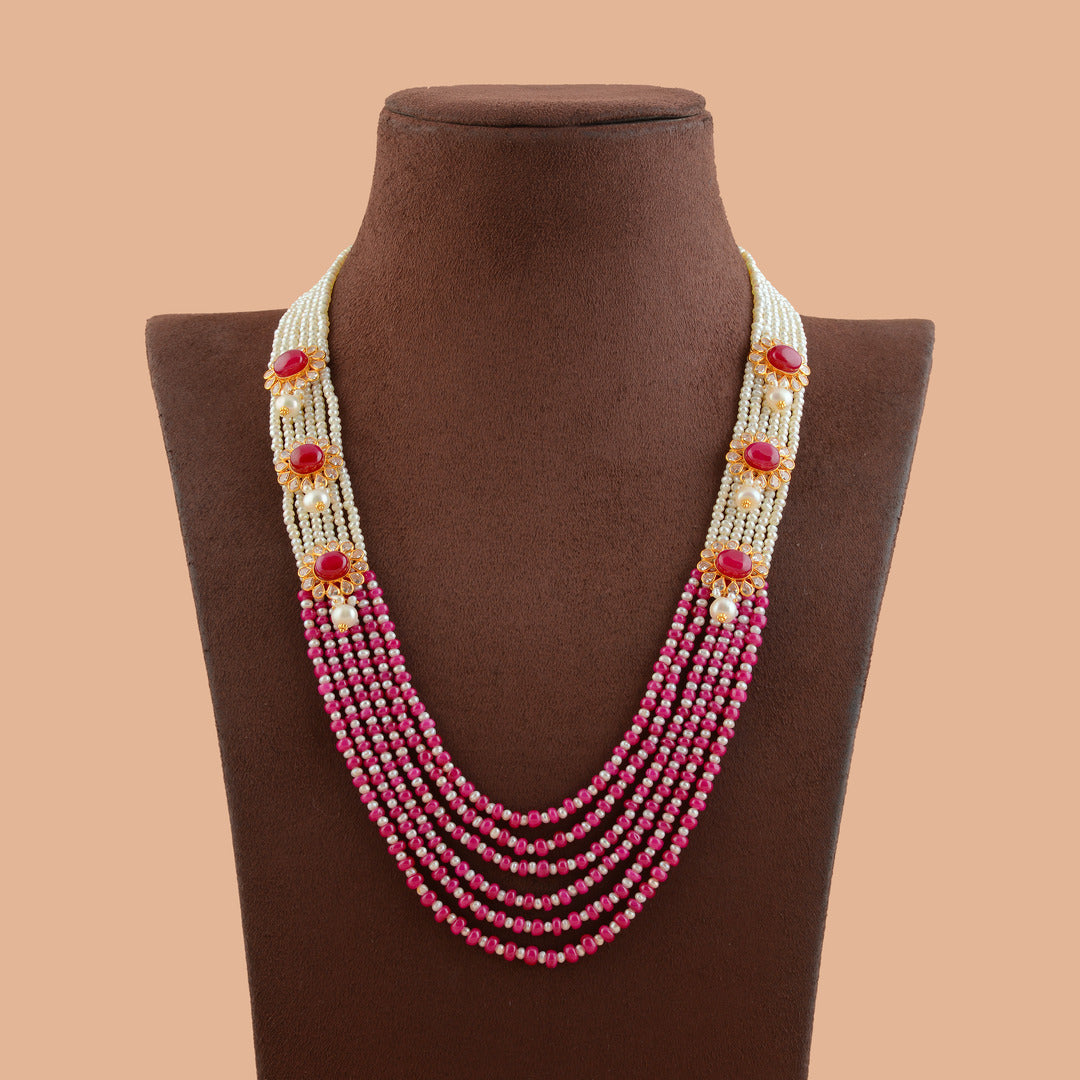
Groom's jewellery at a Krishna Pearls exhibition — trying a pearl mala on, styling a mala against the sherwani, and a four-strand pearl haram with a polki and ruby pendant.
Rethinking Men's Jewellery
How exhibitions help men find their style
By Vaishali Bhramaramba, Jewellery Designer | Krishna Pearls, Hyderabad
Quick Answer
Most men have never worn much beyond a watch and a ring, so the hardest part of buying men's jewellery is not choosing a design — it is working out what suits you. An exhibition solves that directly: you can see thin chains next to heavy ones, classic rings next to contemporary ones, and groom's malas layered on an actual sherwani, then try them on and ask questions before deciding.
For a long time, men's jewellery in India meant a short list: a watch, a ring, a chain, possibly a bracelet.
That is no longer the case.
Contemporary chains and bracelets, signet and statement rings, cufflinks, brooches, kadas and full groom's wedding sets — the category has widened considerably. But for a large share of buyers, wearing jewellery at all is still new territory. And that is precisely where an exhibition helps you take the first step.
More Choices, Less Guesswork
The most common obstacle to buying men's jewellery is not price or availability. It is simply not knowing what will suit you.
At an exhibition you can observe proportions, finishes, metals and construction techniques all at once. A fine chain sits next to a heavier one. A classic gold ring sits beside a modern brushed-finish design. You are not forced to pick between two near-identical options — you get to discover your own taste by seeing the full spread.
Men's jewellery depends on proportion more than almost anything else. Whether a bracelet is broad enough for your wrist, whether a chain falls at the right length on your chest, whether a ring reads confident or oversized on your hand — these are millimetre decisions. Seeing and wearing the piece gives you an instant, accurate read on scale that no product photo will.
Piece
What to judge in person
Chain
Length against your collar, link width against your build, whether it sits above or below the shirt line.
Bracelet / kada
Width relative to wrist size, weight over a long evening, how it sits against a watch.
Ring
Face size against finger width, height of the setting, whether the finish suits daily wear.
Groom's mala / haram
Number of layers, drop length on a sherwani, how the pendant balances a kalgi or turban.
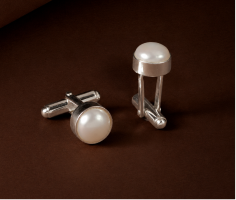
Cufflinks / buttons
Scale against cuff and shirt fabric, and whether they coordinate with the rest of the set.
Jewellery for Different Occasions
Another advantage of an exhibition is that it encourages you to think past a single event.
A customer shopping for wedding jewellery often finds pieces that also work for festivals and formal occasions. Someone looking for an everyday chain may discover a design that moves comfortably from office to evening. The wider the selection in front of you, the easier it becomes to build a small jewellery wardrobe rather than buying one isolated piece for one date in the calendar.
Interest in men's wedding jewellery is growing across the trade as well. At IIJS Bharat Signature 2026, exhibitors reported rising retailer demand for groom's jewellery — including polki and jadau-inspired designs — reflecting a broader expansion of men's wedding offerings.
Four strands, a polki pendant, a pear-cut ruby — drop length and pendant scale are decisions you can only really make with the piece in front of you.
A Space to Ask Without Hesitation
For someone buying jewellery for the first time, questions about metal, purity, finishing, care, styling and suitability are entirely reasonable. Most buyers simply never get a comfortable setting in which to ask them.
An exhibition provides direct access to people who answer those questions for a living. That matters most when you are weighing several designs against each other. Instead of relying on assumptions, you understand what you are buying and why one piece fits your requirement better than another.
Questions worth asking
What karat is this, and why was that purity chosen for this design?
How much of the weight is metal and how much is stone?
Will this finish hold up to daily wear, or is it an occasion piece?
Can the length, width or size be altered later?
What does upkeep involve — polishing, re-stringing, storage?
How does this layer with the rest of a wedding set?
Key Takeaways
Men's jewellery has widened well beyond watches and chains — wedding jewellery in particular.
Proportion decides everything, and proportion can only really be judged by wearing the piece.
Comparing several weights and finishes in one visit is how you discover your own taste.
Thinking in terms of a wardrobe rather than a single piece gives you far more wear per rupee.
An exhibition is a low-pressure place to ask the beginner questions nobody wants to ask across a counter.
From Accessory to Identity
Men's jewellery is steadily becoming a form of personal expression rather than an occasional accessory pulled out for a function.
An exhibition lets you go through that shift at your own pace. You can start with something restrained, try a few bolder pieces, and keep going until you find the one that actually reads as you.
The modern male jewellery buyer is not looking for more jewellery. He is looking for the right jewellery. An exhibition gives him the options to find it — because identifying your own style almost always depends on having several things in front of you first.
Frequently Asked Questions
What jewellery can men wear at an Indian wedding?
A groom typically wears a layered mala or haram, a kalgi or brooch on the turban, rings, a kada or bracelet, and sometimes a waistband ornament or decorative buttons. Pearl and ruby malas, polki pendants and jadau-inspired sets are common choices for Hyderabad grooms.
How do I know what chain length suits me?
It depends on your build and on where you want the chain to sit — above the collar, at the sternum, or lower for a layered look. This is the clearest argument for trying pieces on: two inches of length changes the look completely, and no size chart will tell you that.
Should men choose gold, silver or platinum?
Gold suits traditional and wedding wear and holds resale value. Silver is an easy, lower-commitment way to experiment with contemporary designs. Platinum is denser, more understated in colour and popular for wedding bands. Many men end up owning a mix, chosen by occasion rather than by rule.
Is polki or jadau suitable for men's jewellery?
Yes. Polki and jadau work particularly well in groom's malas, kalgis and statement pendants, where the uncut-diamond setting gives depth without looking overly bright. Trade interest in these designs for men's wedding wear has been growing.
Where can men try on wedding jewellery in Hyderabad?
Krishna Jewellers Pearls & Gems carries groom's jewellery across its seven Hyderabad showrooms, with expanded selections during exhibitions. You can also arrange a private viewing if you would prefer to try pieces without the crowd.
Trying Men's Jewellery for the First Time?
Tell us the occasion and the outfit. Our specialists will pull together a selection worth trying on — groom's malas, kadas, rings and statement pieces.
Vaishali BhramarambaJewellery Designer, Krishna Pearls — a Hyderabad fine jewellery house established in 1983 at Pathragatti, Charminar, now with seven showrooms across the city.
Reference: exhibitor observations reported from IIJS Bharat Signature 2026.




 Festive Giftbox
₹ 1,300
Festive Giftbox
₹ 1,300