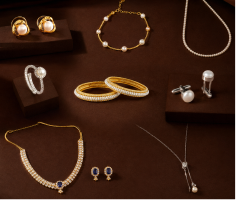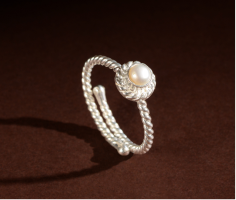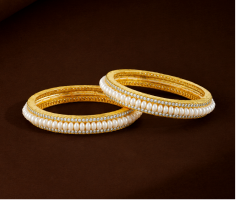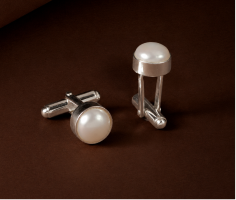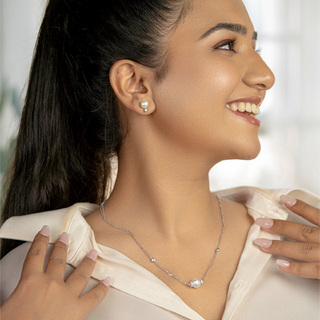

When two pearl necklaces look similar online but carry dramatically different prices, it is natural to wonder whether the affordable one is genuine—or whether the expensive one is genuinely better. Community discussions show that this is one of the most persistent misunderstandings in pearl buying.
The answer is reassuring: affordable pearls can be real. Freshwater cultured pearls are usually more accessible than Akoya, South Sea or Tahitian pearls because of how they are produced and how widely they are available. Price alone does not establish authenticity, and pearl type alone does not establish quality.
The short answer: Choose freshwater pearls when you value variety, durability and accessible pricing. Choose Akoya when you specifically want a highly round, carefully matched strand with sharp, classic lustre. In either category, prioritise lustre, surface quality and matching over a grade label by itself.
What pearl buyers are debating online
“Are affordable pearls actually legitimate?”
A large r/jewelry discussion about affordable pearls brought together collectors, second-hand buyers and casual shoppers. The consensus was that genuine freshwater pearls can be inexpensive, while price rises with type, lustre, roundness, size, matching, metal and brand. Several participants also preferred baroque and irregular pearls precisely because their individuality made them beautiful and accessible.
“Is the Akoya upgrade obvious in person?”
In a focused Akoya-versus-freshwater discussion, owners of both types described Akoya reflections as crisper and freshwater lustre as softer. Importantly, experienced commenters pushed back on simple rules: a well-selected freshwater strand can outperform a weak Akoya strand, and matching matters most when pearls sit beside one another in a necklace.
“What should a first-time buyer prioritise?”
A pearl-necklace guidance thread explored budgets, strand lengths, sizes and the difference between paying for a famous name and paying for visible quality. Another discussion on buying pearl jewellery online stressed clear disclosure, close-up images, return terms and seller knowledge.
“Are Akoya pearls always better?”
A Quora comparison of Akoya and freshwater pearls contained the most useful disagreement of all: “better” depends on the desired appearance, budget and use. One popular answer compared the choice to preferring straight or curly hair—different character, not a universal hierarchy.
Freshwater pearls and Akoya pearls at a glance
| Factor | Freshwater cultured pearls | Akoya cultured pearls |
|---|---|---|
| Environment | Freshwater mussels in lakes, rivers or ponds | Saltwater Akoya oysters |
| Typical look | Broad variety of shapes, sizes and pastel colours; often a softer glow | Classic white-to-cream, highly round pearls with crisp reflections |
| Availability | Greater production and a wide price range | Lower yield and generally higher prices |
| Best suited to | Everyday wear, colour, organic shapes and value | Traditional strands, formal dressing and sharp lustre |
Why freshwater pearls can cost less without being fake
Freshwater mussels can produce more pearls per cultivation cycle than saltwater Akoya oysters. That greater supply helps make genuine freshwater pearls available at accessible prices. Many traditional tissue-nucleated freshwater pearls are composed largely of nacre, though modern freshwater cultivation also includes bead-nucleated varieties.
This last point matters because old shortcuts are becoming unreliable. GIA has documented new bead-nucleated freshwater pearls with round shapes and bright lustre that can visually resemble Akoya pearls. It cautions that names such as “freshwater Akoya” can be misleading because the pearl is still freshwater, not Akoya. Read GIA’s explanation of the “freshwater Akoya” misnomer.
What actually determines whether a pearl is good value?
Lustre
Lustre is the most visible quality factor. GIA describes excellent lustre as bright, sharp reflection and identifies it as one of the most important pearl value factors. Compare pearls in neutral light and look for depth rather than a flat surface shine.
Surface
Minor natural characteristics are normal. Numerous pits, cracks, chalkiness or damaged nacre can lower beauty and durability. Judge severity and placement rather than expecting a completely featureless surface.
Shape
Round pearls command a premium because they are harder to produce and match. Off-round and baroque shapes are not failed pearls; they are a different aesthetic and can offer excellent value.
Size
Larger pearls generally become more valuable when the other factors remain equal. A small increase in diameter also produces a noticeable increase in visual presence, so choose the size that suits the wearer rather than chasing the largest number.
Nacre and durability
Nacre quality affects both beauty and longevity. Thin or poorly formed nacre can look chalky or reveal the nucleus, while good nacre supports stronger lustre. Do not rely on pearl type alone; inspect the actual piece and its disclosure.
Matching and workmanship
On a strand, pearls should feel deliberately assembled. Look for consistent lustre, compatible colour and a smooth progression of size. Check the knots, thread, clasp and precious-metal hallmark. These details influence both wearability and price.
Which pearl should you choose?
Choose freshwater pearls if:
- you want genuine pearls at an accessible price;
- you enjoy pink, peach, lavender, baroque or off-round forms;
- the jewellery will be worn frequently;
- you prefer a softer, organic glow;
- you want more size or design variety within a budget.
Choose Akoya pearls if:
- you want the archetypal round white pearl strand;
- sharp, mirror-like lustre is the priority;
- precise matching and formal appearance matter;
- you are comfortable paying more for rarity and uniformity.
How to compare pearls online
- Confirm the exact pearl type and whether any treatment is disclosed.
- Request close-ups in neutral light, not only retouched campaign images.
- Check size in millimetres, necklace length and metal purity.
- Look for a clear explanation of lustre, surface, shape and matching.
- Read the return, exchange and restringing policies.
- Compare like with like: the same type, size, quality and setting.
A grade such as “AAA” is useful only when the seller explains what its scale means. Pearl grading is not universally standardised across every retailer, so the visible factors and written description matter more than the letters alone.
Find the pearl that fits your life
The best pearl is not automatically the most expensive one. It is the piece whose lustre, character, scale and construction suit the person who will wear it. Explore Krishna Pearls’ pearl necklaces, pearl earrings and pearl combinations to compare shapes and styles.
Frequently asked questions
Are freshwater pearls real?
Yes. Freshwater cultured pearls are real pearls grown inside freshwater mussels with human assistance.
Why are Akoya pearls more expensive?
Akoya production yields fewer pearls, and highly round shapes, sharp lustre and precise matching command a premium.
Can high-quality freshwater pearls resemble Akoya?
Yes. Modern cultivation can produce very round, bright freshwater pearls. Accurate naming remains important because they are still freshwater pearls.
Which type is better for everyday wear?
Freshwater pearls are often an excellent everyday choice because they combine real nacre, variety and accessible replacement cost. Any pearl still needs protection from chemicals, abrasion and impact.