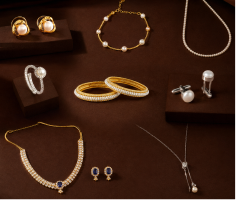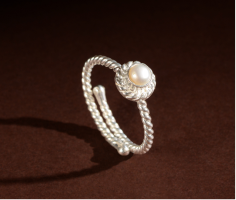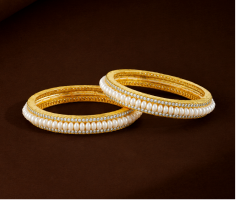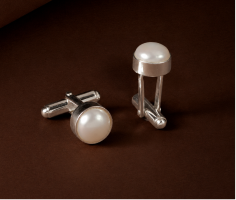

Hyderabad may be known as the City of Pearls, but the question shoppers ask most often is wonderfully practical: how do I know I am buying genuine pearls at a fair price? Online discussions show that buyers are not short of shop names. They are short of a reliable way to compare what those shops are offering.
This guide turns those recurring questions into a simple buying process. It explains what you can check yourself, what a seller should disclose, and when only a trained gemologist or laboratory can give a conclusive answer.
The short answer: Choose the pearl, not just the shop name. Ask whether it is freshwater or saltwater, cultured or imitation, treated or naturally coloured, and how its lustre, surface, shape, size, nacre and matching affect the price. Home checks provide clues; they do not replace a professional report for a valuable purchase.
What Hyderabad shoppers are discussing
We reviewed real buyer conversations rather than promotional posts. These discussions reveal where people feel uncertain and which answers repeatedly prove useful.
“Where can I find authentic pearls in Hyderabad?”
In a local r/hyderabad discussion about genuine pearl shops, buyers compared established retailers with smaller local stores, debated price premiums and asked how to verify quality before negotiating. The useful takeaway was not a single “best” shop; it was that authenticity and value are separate questions. A genuine pearl can still be poorly matched, low in lustre or overpriced.
Transparency note: the discussion mentions Krishna Pearls among several retailers. We include it because it directly reflects the local buying question, not as an independent endorsement.
“Can a photograph tell me whether a necklace is real?”
A highly active r/jewelry identification thread shows why photographs are only a starting point. Participants examined drill holes, knots, clasp markings, surface variation and the way light reflected from the strand. They also challenged a common myth: knots may signal good stringing, but imitation pearls can be knotted too.
“Why are these pearls peeling?”
In the widely discussed thread “What’s going on with these pearls?”, commenters disagreed over whether visible peeling meant imitation coating or thin, damaged nacre on cultured pearls. That disagreement is instructive. Surface damage can have more than one cause, and confident identification from a picture can be misleading.
“Which home test should I trust?”
A real-or-fake discussion in r/pearls focused on texture, drill holes, uniformity, knotting and clasp quality. A broader Quora discussion on identifying genuine pearls reached a similar conclusion: several observations together are more useful than one “magic” test, while laboratory methods are needed to distinguish natural from cultured origin conclusively.
Five checks to make before buying pearls in Hyderabad
1. Ask for the pearl type in plain language
“Real pearl” is too vague for a meaningful comparison. Most pearls sold today are cultured, and cultured pearls are real pearls produced inside a living mollusc with human assistance. Ask the seller to state the type clearly:
- Freshwater cultured pearl: generally accessible in price and available in many shapes and colours.
- Akoya cultured pearl: usually smaller, rounder and known for sharp, mirror-like lustre.
- South Sea or Tahitian cultured pearl: typically larger, rarer and priced at a premium.
- Imitation pearl: a manufactured bead made to resemble a pearl.
If the description uses only words such as “original,” “premium” or “Hyderabadi” without naming the pearl type, ask for clarification before discussing price.
2. Judge quality through recognised value factors
The Gemological Institute of America evaluates pearls using seven pearl value factors: size, shape, colour, lustre, surface, nacre and matching. Lustre is especially important. Under diffused daylight, a higher-quality pearl should show bright, defined reflections rather than a flat, chalky glow.
Do not assume that every surface mark is bad or that perfect roundness automatically means better value. Some shoppers deliberately prefer baroque or softly irregular freshwater pearls. Quality is about how well the pearl delivers the look you want, not how closely it resembles a plastic sphere.
3. Inspect the drill holes and the whole strand
With permission, look at a drill hole under magnification. Flaking coating, exposed glass or plastic, pooled paint and unusually large holes can suggest imitation pearls. On a genuine strand, also check:
- whether lustre remains consistent from pearl to pearl;
- whether the strand is intentionally graduated or poorly matched;
- whether knots and thread are clean, secure and proportionate;
- whether the clasp is functional and correctly hallmarked when precious metal is claimed.
A fine clasp does not prove that the pearls are fine, and a simple clasp does not automatically make genuine freshwater pearls fake. Treat the construction as supporting evidence.
4. Use home tests only as clues
The familiar texture test can help separate nacreous pearls from very smooth plastic or glass imitations. If the piece belongs to you, gently rubbing two pearls together may produce a faintly gritty sensation. Avoid scraping, biting, vinegar, flame or any destructive test. Sophisticated imitations can pass simple weight or temperature checks, and home tests cannot reliably establish natural versus cultured origin.
For an expensive, antique or investment-grade purchase, professional testing is the sensible route. GIA explains that pearl laboratories use imaging and other methods to identify and classify pearls.
5. Compare the complete offer, not just the final discount
Before paying, request a written invoice or product description covering pearl type, metal purity, treatments where disclosed, size, colour, return terms and any certification supplied. Compare similar pieces: a freshwater strand should not be judged against a South Sea strand merely because both are white.
Ask yourself three questions:
- Is the pearl accurately described?
- Does its visible quality justify the price?
- Will the seller support the purchase if the description proves inaccurate?
What “certified pearls” should mean
A certificate is useful only when you understand who issued it and what it confirms. A store certificate may document the seller’s description and guarantee. An independent gemological report may identify pearl type, growth environment, treatment or quality characteristics depending on the service. Neither should be treated as a decorative card.
When shopping with Krishna Pearls, ask our team to explain the pearl type, visible quality factors and care requirements in ordinary language. Our role is not simply to say that a piece is authentic; it is to help you understand why it looks and costs the way it does.
A simple Hyderabad pearl-shopping checklist
- Confirm cultured freshwater, Akoya, South Sea, Tahitian or imitation.
- Examine lustre in natural or diffused light.
- Look for surface condition and consistency, not artificial perfection.
- Inspect drill holes, stringing, knots and clasp.
- Ask whether colour or surface treatments are present.
- Record pearl size and metal purity on the invoice.
- Read exchange, return and service terms.
- Request professional verification for a high-value or antique purchase.
Explore pearls with more confidence
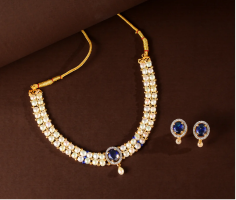
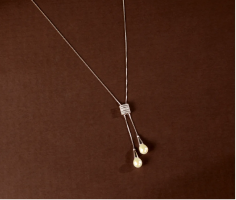
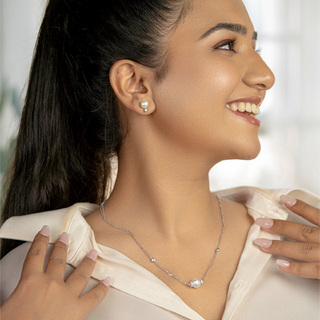
Once you know how to compare type, lustre and construction, the experience becomes far less intimidating. Explore certified pearl necklaces, pearl earrings and coordinated pearl sets, or visit Krishna Pearls in Hyderabad for guidance in person.
Frequently asked questions
Are cultured pearls real?
Yes. Cultured pearls form inside living molluscs with human assistance. Imitation pearls are manufactured beads made to resemble pearls.
Does knotting prove that a pearl necklace is genuine?
No. Knotting protects a strand and may indicate careful workmanship, but imitation pearls can also be individually knotted.
Can I identify natural pearls at home?
No home test can conclusively distinguish natural from cultured origin. Valuable pearls should be examined by a qualified gemologist or laboratory.
Why can genuine freshwater pearls be affordable?
Freshwater molluscs can produce multiple cultured pearls, making supply greater. Price still varies with lustre, surface, shape, size, colour and matching.